


When you’re building your business, even before thinking about the product, market or pricing, there’s something you need to decide.
Is your product going to solve a pain in the market? Or is it going to amplify a gain?
That single choice determines your customers, your marketing, your retention, your energy, and the kind of company you’ll still want to run five years from now.
Two Very Different Billion-Dollar Businesses.
Let’s look at two real examples.
Weight Watchers was born to solve a pain
Weight Watchers founder, Jean Nidetch started the business because she observed a real pain in the market.
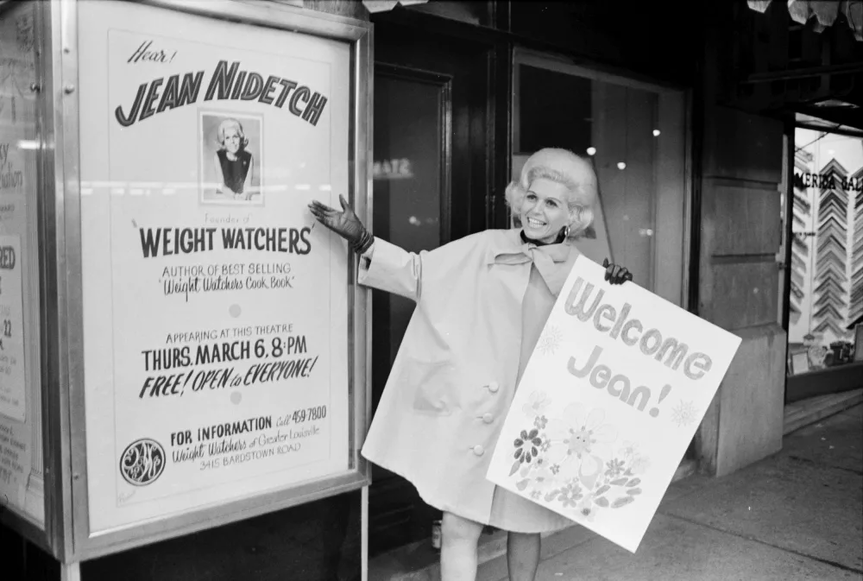
Women were gaining weight and didn’t know how to stop.
Diets were confusing. Extreme. Lonely. Most plans worked for a few weeks and then failed.
Clothes stopped fitting. Energy dropped. Doctors raised concerns. Confidence disappeared.
The pain was obvious.
And it showed up daily in mirrors, photos, and health reports.
Weight Watchers didn’t promise self-love or confidence.
It didn’t sell becoming your best self.
It sold control.
Clear results
Simple rules
Weekly check-ins
A system you didn’t have to invent on your own
For women, this wasn’t exciting. It was grounding.
Once the system was in place, leaving felt risky.
Going back meant guessing again.
Eating with guilt.
Starting over alone.
That’s why people returned again and again.
Not because Weight Watchers inspired them.
But because it removed pain they didn’t want back.
Now look at Apple.

Apple didn’t fix a broken computer or phone market.
People already had PCs. People already had phones.
Apple sold gain.
Identity. Aspiration. A way of seeing yourself as creative, modern, and ahead.
Think differently.
Create more beautifully.
Work smarter.
Be someone who shapes the future, not reacts to it.
No one wakes up in panic thinking,
“I must buy an iPhone or a Mac today.”
Yet millions do, repeatedly.
Lesson
Weight Watchers monetized a solution to a real pain.
Apple monetized aspirational identity.
Both won.
But they built entirely different machines.
The Hidden Economics of Pain vs Gain
This is where things get interesting for founders.
Pain Markets
Pain buyers decide faster because the cost of inaction feels dangerous.
But that speed comes with less-obvious dynamics:
Customers talk about problems constantly
Support expectations are higher
They are hyper-aware of what’s still not working
If pain drops, urgency drops with it
Pain markets reward precision and reliability, not inspiration.
They are excellent for:
Clear ROI
Predictable revenue
Enterprise, health, finance, operations
But they require emotional stamina.
You are paid to sit inside other people’s friction.
Gain Markets
Gain buyers move slower because nothing is “on fire.”
But when they commit, they often stay longer.
Why?
Because they are not buying a fix.
They are buying a future self.
Gain markets tend to have:
Lower urgency upfront
Higher emphasis on trust and resonance
Strong brand and community effects
Higher lifetime value when done right
These businesses reward vision, narrative, and consistency.
But they don’t like vague promises.
If the transformation isn’t felt, buyers drift.
Why Some Founders Burn Out (And Others Don’t)
Here’s the part no one talks about.
Pain customers externalize their discomfort.
They come to you carrying it.
Gain customers internalize responsibility.
They see you as a guide, not a rescuer.
Neither is better.
But they require different nervous systems.
If you are energized by:
• Diagnosing problems
• Creating certainty
• Being indispensable
Pain markets will feel clean and motivating.
If you are energized by:
• Vision
• Growth conversations
• Long arcs of transformation
Pain-heavy audiences may exhaust you.
Pricing in these markets
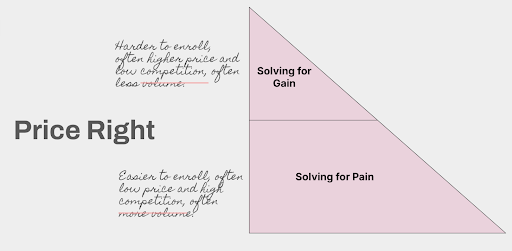
Pain markets are usually larger. More people are stuck. More people are struggling.
But they often have tighter budgets.
They want relief, but they are careful with how much they spend.
Gain markets are smaller. Fewer people are actively looking.
But the ones who are looking usually already have momentum.
They’ve made money. They’ve solved the basics. They are willing to invest more to grow further.
This is why the choice isn’t just about demand.
It’s about fit.
If you get energy from listening to problems and fixing what’s broken, pain markets will feel natural.
If you prefer talking about growth, vision, and what’s possible next, gain markets will feel lighter.
How to Decide Whether You Should Solve Pain or Create Gain - The Pain Vs Gain Model
Assume both markets exist.
Assume both can make money.
This decision is about fit, not opportunity.
Step 1: Notice What Your Mind Automatically Looks For
When someone explains their situation, what do you focus on first?
• What’s broken, leaking, or failing → pain
• What’s next, possible, or expandable → gain
You don’t choose this.
It’s your default lens.
Step 2: Check Your Energy After A Conversation
If the conversation was pain-heavy, do you feel energized by holding space or drained?
If the conversation was about helping someone tap into more aspiration or motivation, does it feel fulfilling or neutral?
Step 3: Observe What People Already Ask You For
Not what you sell.
What people naturally come to you with.
• Venting, fixing, clarity → pain
• Direction, growth, perspective → gain
Most founders formalize what they already do informally.
Step 4: Decide What Level of Responsibility You Want
Pain markets tie you closer to consequences.
If you fail, things break.
Gain markets are more forgiving.
If you fail, progress slows.
Choose the weight you’re willing to carry.
Step 5: Be Honest About Pricing Comfort
Pain feels concrete but emotionally heavy.
Gain feels abstract but is easier to price high.
Ask:
Do I prefer charging to prevent loss or enable growth?
Step 6: Define the State You Want to Live In
Complete this sentence:
“I want to spend my days talking about ______.”
• How to help people fix something → pain
• Unlocking the next level, possibilities, dreams, aspirations→ gain
That’s your market.
Reflection Prompts
• Do I want urgency-driven customers or identity-driven customers?
• If my customer’s pain disappeared, would my business still matter?
• Am I building something that needs constant fires to sell?
• What emotional state am I repeatedly stepping into as the founder?
• Five years from now, will this work energize or deplete me?
Your Action Steps
Audit your last 10 conversations
Write down what people came to you with first. Problems or ambitions. Don’t interpret. Just list.Track your energy, not your ego
After each call, note one word: energized or drained. Patterns matter more than outcomes.Price-test your instinct
Ask yourself which feels easier to charge for: removing pain or creating upside. Your answer reveals comfort with responsibility.Define failure, not success
Write what it would feel like if your client didn’t get results. If that weight feels heavy, pain markets may burn you out.Choose one lane for 90 days
Design one offer that solves either pain or gain. Don’t mix. Clarity beats cleverness.
Let’s Build It Together
I built a program called Scale to a Million, which is a step-by-step system to find a market that fits you and turn it into a scalable business.
If you’d like my support as you figure this out and build it right, this is your window to join.
Doors close as soon as we fill 50 seats.

How did we do?
If this gave you a perspective you haven’t heard before, share your thoughts in the comments below. I read every comment — your feedback helps me create content that truly moves you forward.
Love. Ajit

Comments